

Bumpy road to Etosha
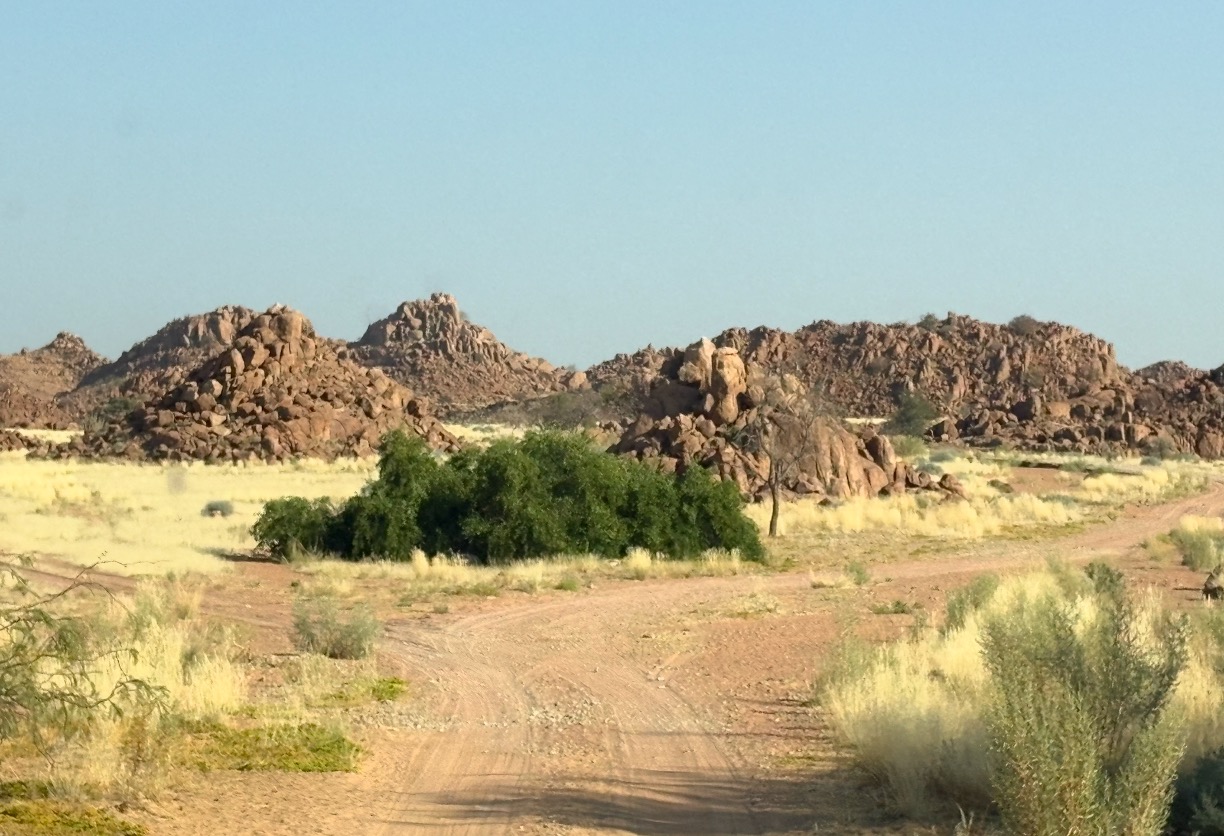
We settle the bill and leave the magic of Brandberg and the White Lady behind. Our next destination is Etosha National Park, via Outjo. We find ourselves on a narrow bumpy two-spoor in the middle of nowhere, between several similar paths, turning into all directions, but no direction signs. I wonder by myself if Henry knows where to go, but I’d rather not ask.
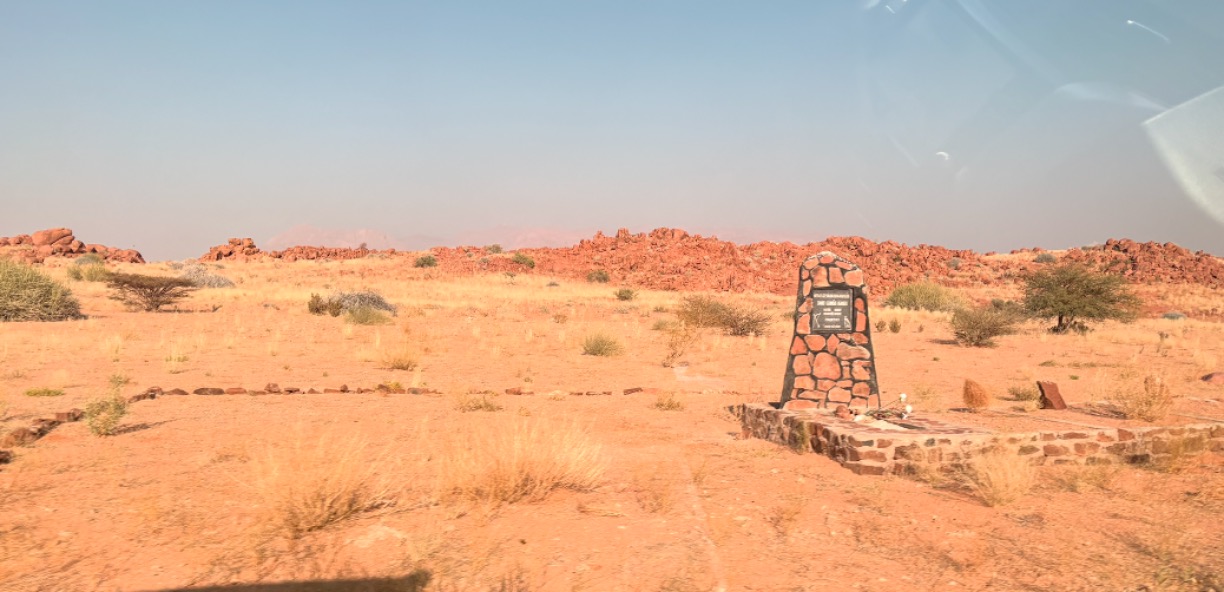
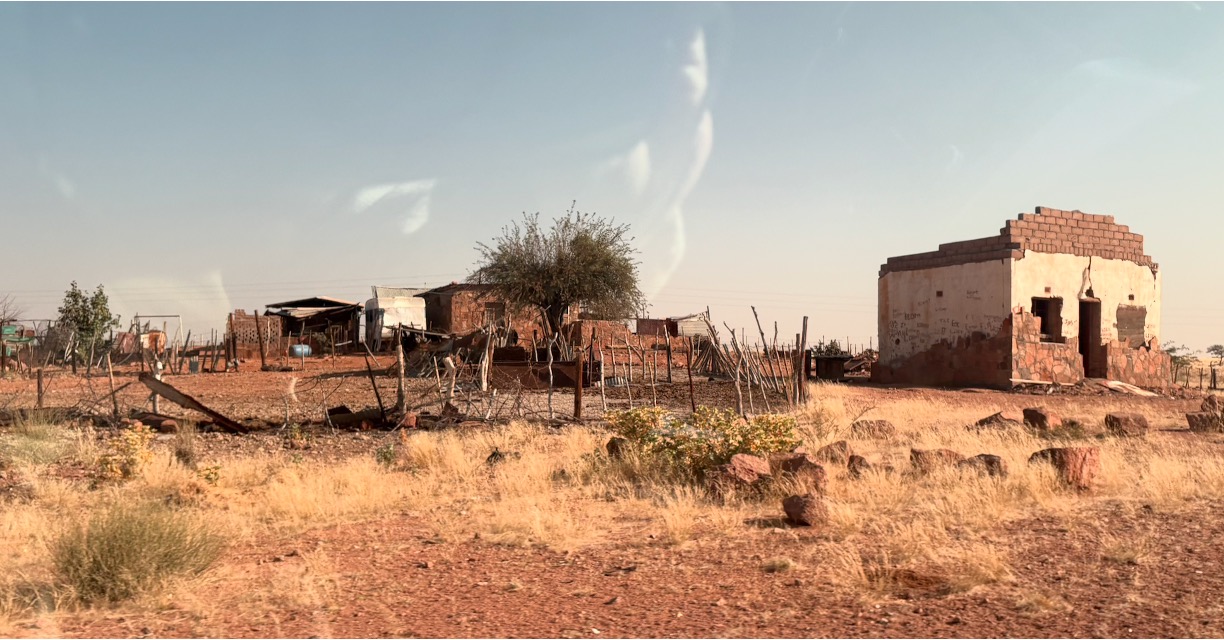
There is no trace of humans here. The landscape can be described as pristine and inhospitable at the same time. To me it is spectacular. Two large rock formations on both sides of the road look to me like fortresses from pre-historic times. At some point the grassland is replaced by volcanic rocks. The road is now extremely bumpy. Everything inside rattles. We pass a small village, but it seems to be deserted.
Henry stops in the middle of the path consulting the navigation tools trying to find the main route to Outjo. He searches Track4Africa, Google Maps, Maps.me, and whatever else. According to iOverlander we seem to be still in Sorris Sorris, but not even on a road.
A gentleman appears at the driver’s window. “Are you waiting for someone?” Politely. Almost friendly.
“Sorry, I didn’t see you.” Henry responds, a bit absent minded, and pulls over slightly into the bush to make way for the vehicle behind to pass.
Eventually we continue slowly. The GPS tells us we’re now on the road known as the D2319. Suddenly the road widens. We spot a lone donkey cart approaching from the front.
We turn rightward to C35. Suddently the gravel lies wide and bumpy ahead of us. Occasional smooth stretches offer a welcomed breeze between corrugations. We turn right on C39. Tarmac at last. In Otjo we fill up, eat our sandwiches and continue to Etosha. Little do we know what is still waiting for us.

Entering Etosha and Settling in at Halali Rest Camp
We enter the park at Okaukuejo Restcamp, apparently the main camp, and pay the entrance fee. From here we drive to our camp, Halali. Shortly out of Okaukuejo two flags, one of Namibia and the other, I guess, of the Tourism Department stir lamely on two poles outside an official building in need for some TLC.
The road takes us on a confusing detour out of the park. It is far and the road is bad. We’re not sure if we’re still on the right way. After two hours we reach an entrance to the park again. This seems to be the main entrance.
They confiscate all our plastic bags we use for rubbish. We’re allowed to take meat inside, but only cooked meat out.
The rest-camp is large and full. We drive around looking for a comfortable space with enough shade and not too close to other campers. At last, we settle into the best one we can find. A lady approaches us with list of bookings to check our booking number and if we are authorised to be here. She is not very friendly. Henry drives to the shop to buy wood while I stay behind to hold our place. When he returns, she checks again.
Medical Emergency at the Waterhole
Halali has a waterhole just outside the rest-camp. Tourists can watch the drinking animals from a pavilion, equipped with wooden benches and rocks to sit on. There are various notice boards along the path, reminding tourists to be silent.
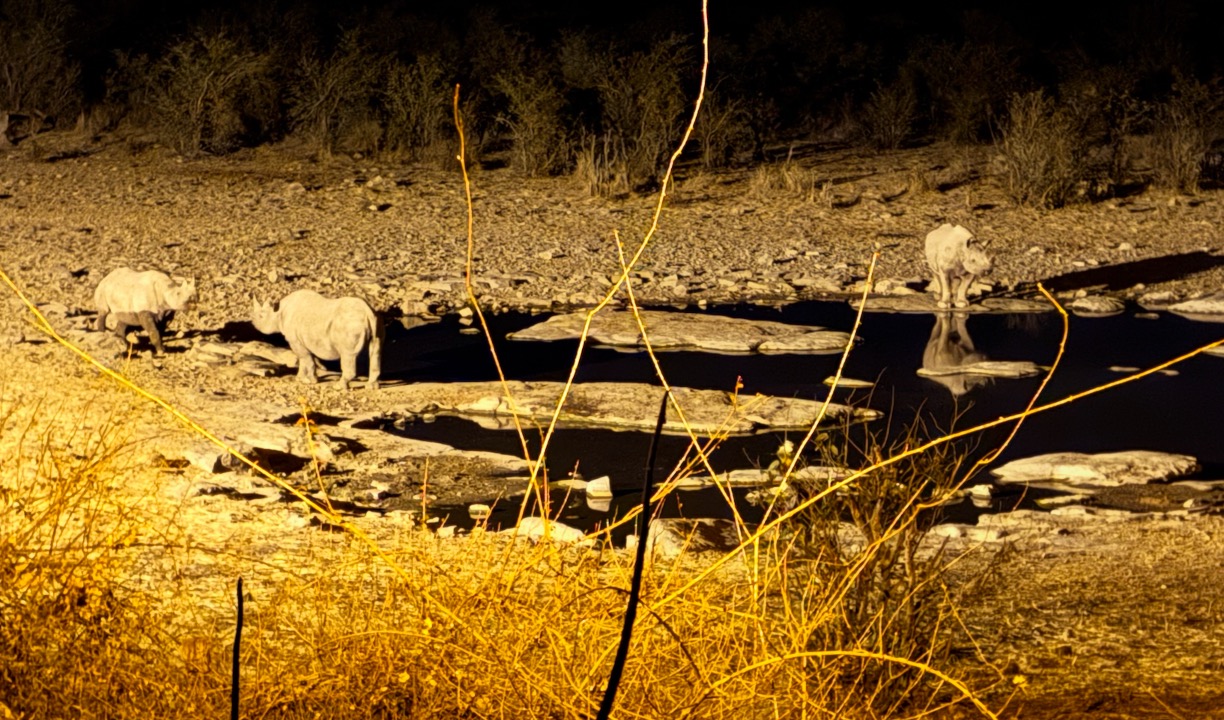
Early evening we hear grunting and roaring. We walk a short distance. There are three rhinos at the waterhole. One is drinking, while another is a bully that chases a third if it dares coming too close to the water. We take photos with our cell phones. Mice are running all over the place. People are leaving and arriving constantly, as quiet as possible. Nobody speaks aloud. As people are leaving, we move closer to the centre for a better view. We settle comfortably upon two rocks. Suddenly Henry jolts beside me. “Something has just bitten me!” He whispers, while squeezing blood out of his finger. We look in the glow of our headlight if we could see what it was, but there was nothing. Just as we rise to leave I see the mouse. Rabies, tetanus spring to my mind. I’m on the verge to start panicking but somehow contain myself. At the campsite I retrieve the first aid kit. There is a good supply of disinfectant, Betadexamine, cortisone and antiseptic ointment. Henry googles, then phones the emergency service. Just as he is about to hang up someone answers. His name is Faustinius. He gives some advice and promises to pop in the next morning.





Another day at Halali - 1 August 2026
We rise slowly. Henry didn’t sleep well. He is worried about the potential consequences of the mouse bite. Me too, but I don’t say it. We’re having coffee and breakfast while people drifting by on their way to the waterhole. Our neighbours are changing next to their rental car. Their tent is too small. We don’t mind. They’re gorgeous and too close to us not to see, even without staring.
Henry’s phone rings. Its Faustinius, the emergency dude. He is on his way.
Looking at Henry’s finger he recognises the small wound as a mouse bite. He was concerned that it might have been a snake, but then it should’ve turned blue by now. He seems to be the camp manager, and very knowledgeable about Namibia. He worked all over the country as tour guide among other job relating to wildlife and tourism. He tells us more about the hazards of mice, rats and snakes.
Henry asked him about the roads and possible campsites further north on our route. He gave us very good advice about the best routes and a short cut out of the camp.
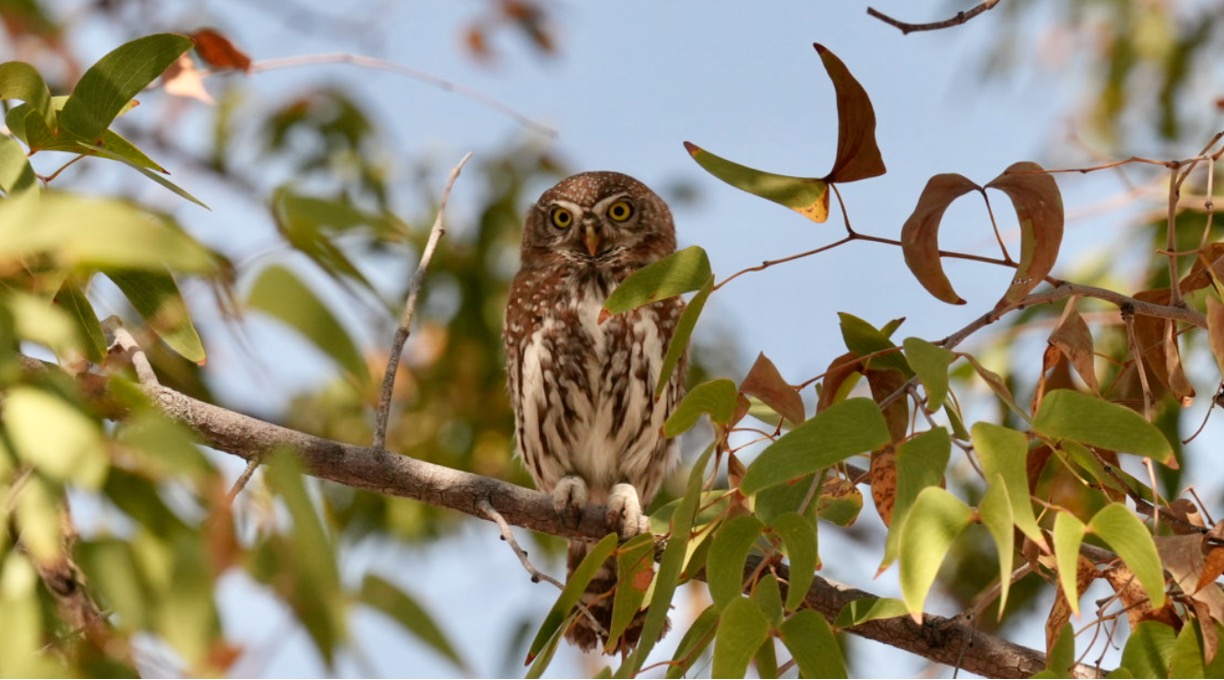
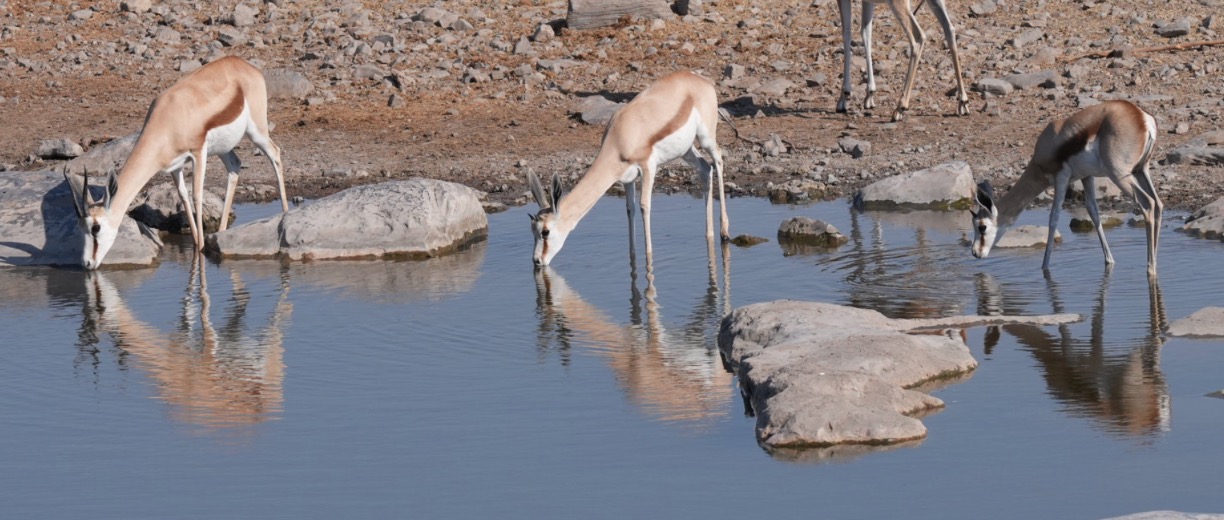
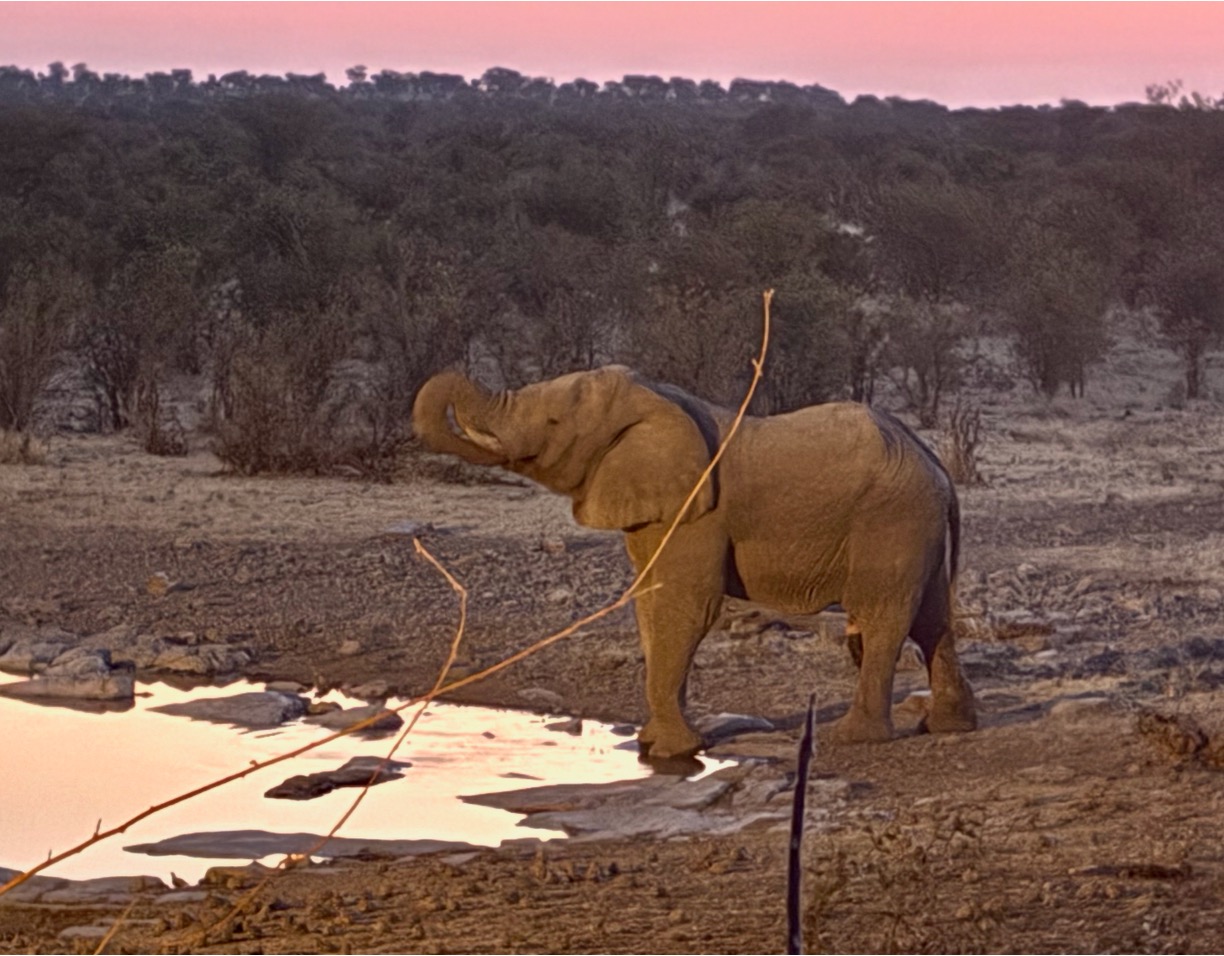
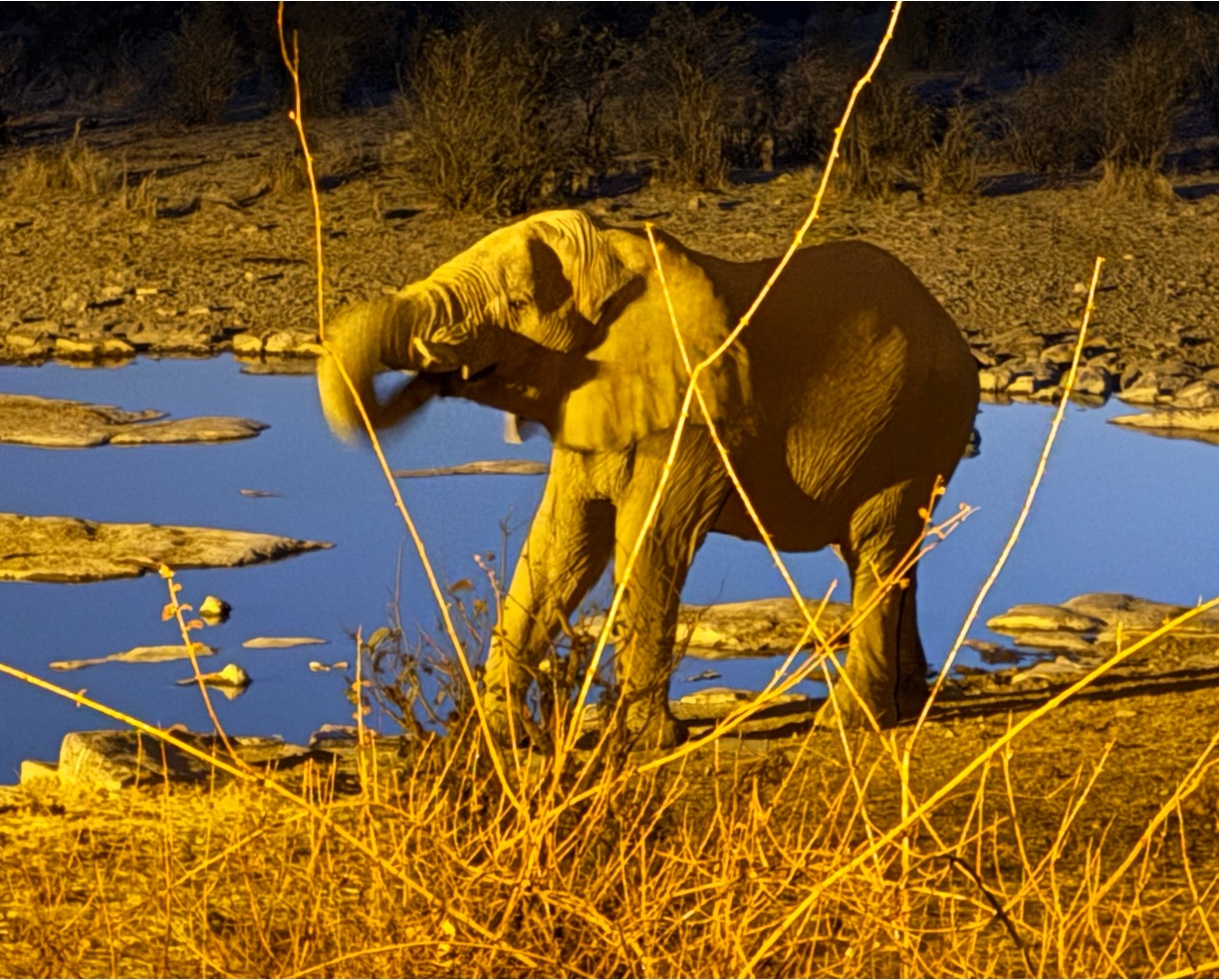
We move to a quieter campsite in a corner close to an ablution facility and the path to the waterhole underneath a large tree. Some squirrels visits us looking for a bite, one even on Skilpad’s roof. Henry spots a small owl sleeping above us in the tree. We’re thrilled by it. We stroll al last time to the waterhole and see plenty impalas, zebras and springbucks. At dusk the elephants and rhinos come as well.
Back at the camp we discover a packet of crisps that has been nibbled. The squirrel I’ve spotted earlier on top of Skilpad must somehow have sneaked in.
Tomorrow, a long road towards Ruacana is awaited. So we call it an early night to take a good rest.